

In the ever-evolving world of high-performance computing, the battle between AMD and Intel continues to captivate technology enthusiasts, gamers, and professionals alike. With the release of the AMD Ryzen 9 9950X and the Intel Core i9-14900K, both chipmakers have solidified their positions at the forefront of desktop CPU innovation. These two flagship processors embody the pinnacle of consumer computing in 2024.
TL;DR
The AMD Ryzen 9 9950X and Intel Core i9-14900K are both powerhouse CPUs, each catering to slightly different needs. The 9950X leads in multi-core performance and is ideal for heavy workloads like content creation, while the 14900K offers top-tier gaming and strong single-core capabilities. Pricing and platform features also play a critical role in choosing between the two. Ultimately, both CPUs are excellent choices, depending on user priorities.
Performance Overview
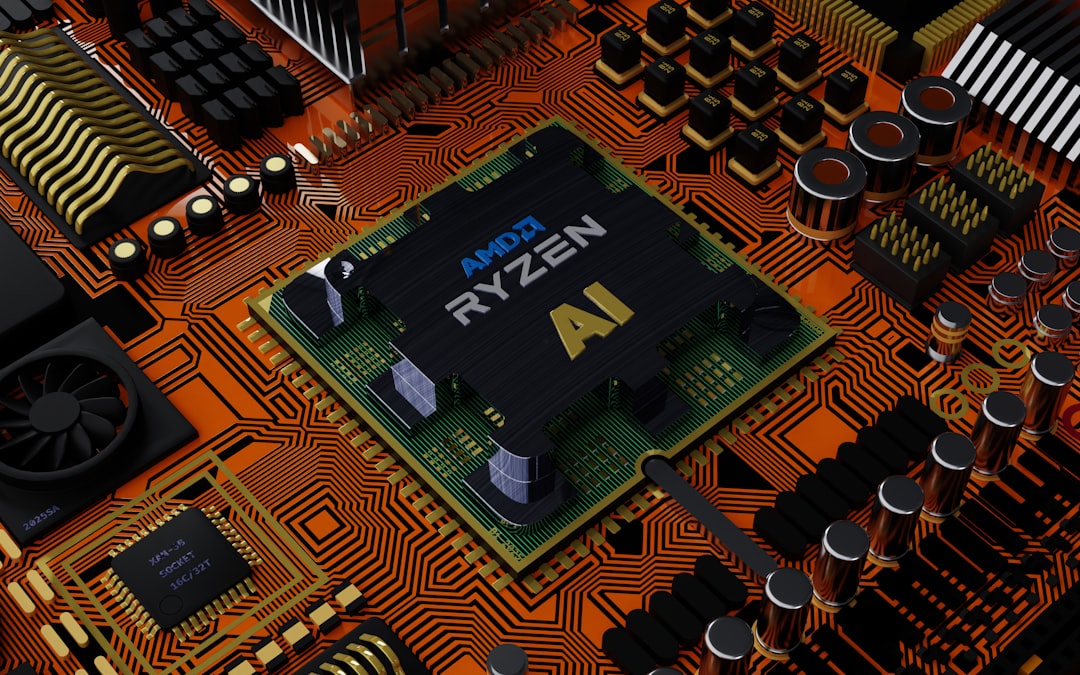
One of the most important aspects when comparing CPUs is raw performance. The AMD Ryzen 9 9950X brings 16 cores and 32 threads to the table with a base clock speed of 4.0 GHz and a boost clock of up to 5.7 GHz. Built on AMD’s latest Zen 5 architecture, the 9950X uses the new AM5 platform and TSMC’s 4 nm process, offering greater transistor density and efficiency.
On the other hand, the Intel Core i9-14900K is equipped with 24 cores (8 Performance-cores and 16 Efficient-cores) and 32 threads, based on Intel’s Raptor Lake Refresh design. With P-core turbo speeds reaching up to 6.0 GHz, the 14900K is optimized for single-threaded tasks and excels in gaming benchmarks.
Benchmark tests reveal subtle performance differences depending on workload type:
- Rendering & Content Creation: Ryzen 9 9950X generally leads in professional workloads such as 3D rendering, video encoding, and multitasking thanks to its uniform core count and high memory bandwidth.
- Gaming: Core i9-14900K consistently nudges ahead in gaming tests due to superior single-threaded performance and architectural tweaks optimised for real-time workloads.
- Multitasking: Both CPUs perform excellently, but AMD’s efficient multi-core throughput gives it a slight edge in sustained parallel workloads.
Thermals and Power Efficiency
As CPUs become more powerful, managing heat and energy consumption becomes increasingly important. The Ryzen 9 9950X is praised for its energy efficiency, consuming an average of 170W TDP under load conditions. Thanks to AMD’s efficient Zen 5 design and 3D V-Cache support in certain variants, the 9950X remains cool under pressure with modest thermal restraints.
Conversely, the Core i9-14900K can consume up to 253W when under stress tests. Intel’s hybrid architecture promotes performance flexibility, but the high power draw results in elevated temperatures, which require substantial cooling solutions—often high-end air or liquid cooling systems.
In summary:
- Ryzen 9 9950X: More efficient, consumes less power, runs cooler.
- Core i9-14900K: Higher peak power draw for marginal performance bumps, needs robust cooling.
Platform and Compatibility
Each CPU requires different motherboards and ecosystems, which could influence buyer decisions. The Ryzen 9 9950X supports the new AM5 platform, including PCIe 5.0 and DDR5 RAM exclusively. This platform is future-ready but necessitates an upgrade from previous AM4-based systems.
Intel’s 14900K sits comfortably in the LGA 1700 socket, supported by Z690, Z790, and similar chipsets. It is compatible with both DDR4 and DDR5 memory, providing users greater flexibility, especially those upgrading from earlier Intel setups. This backwards compatibility offers a cost-effective upgrade path without forcing an entire platform change.
Choosing between the two involves considering cost of additional components:
- Ryzen 9 9950X: Requires new motherboard and DDR5 memory, higher initial platform cost.
- Core i9-14900K: Can work with older DDR4 setups, more accessible for upgraders on a budget.
Overclocking Capabilities
For enthusiasts who like to push their hardware to the limit, both CPUs offer substantial overclocking headroom. AMD includes the Precision Boost Overdrive (PBO) and Curve Optimizer features, which enable automated and granular performance tuning while maintaining efficiency and thermal constraints. The Ryzen 9 9950X shows stable overclocked frequencies near 5.9 GHz with proper cooling setups.
Intel continues to shine with its long-standing support for manual overclocking through the Intel Extreme Tuning Utility (XTU). Focused on tuning P-Cores and E-Cores independently, the 14900K achieves high-frequency performance, often above 6.1 GHz under advanced cooling.
Note: Both CPUs benefit significantly from premium motherboards with strong VRMs and active cooling support.
Price and Value
Price is undoubtedly a critical factor in choosing a high-end CPU. At launch, the Ryzen 9 9950X holds a price point of around $699, reflecting its premium positioning and productivity capabilities. The Intel Core i9-14900K retails near $589, presenting a slightly more affordable option for performance-seekers, particularly gamers.
However, when accounting for supporting hardware, such as DDR5 RAM and chipset costs, platform expenses can influence total system price dramatically.
Conclusion
Choosing between the AMD Ryzen 9 9950X and Intel Core i9-14900K ultimately depends on the user’s intended use case:
- If you’re a content creator, 3D artist, or professional developer, the Ryzen 9 9950X offers greater multi-core horsepower and platform efficiency.
- If you’re a competitive gamer or looking for high frame rates at minimal latency, the Core i9-14900K is likely the better match due to its single-core strength.
Both processors represent outstanding engineering and are among the most powerful CPUs currently available to consumers. Whether powered by red or blue, users will benefit from top-tier performance and future-ready technology.
FAQ
Which CPU is better for gaming, 9950X or 14900K?
The Intel Core i9-14900K tends to perform better in gaming due to its superior single-threaded performance and higher clock speeds.
Does the Ryzen 9 9950X support DDR4 memory?
No, it only supports DDR5 memory through the AM5 platform.
Can I upgrade to the 14900K without changing my motherboard?
If you already have a compatible LGA 1700 motherboard (e.g., Z690 or Z790) and it supports 13th/14th-gen CPUs, you may be able to upgrade with a BIOS update.
Which CPU is more power-efficient?
The Ryzen 9 9950X is more power-efficient, with a lower average TDP and thermal output compared to the Core i9-14900K.
Is the extra cost of the Ryzen 9 9950X worth it?
If your workloads benefit from high multi-core performance—such as video rendering or code compiling—then the 9950X provides excellent value. Otherwise, for gaming and balanced use, the 14900K offers better price-to-performance.